
Jigs for Atlantic bonito
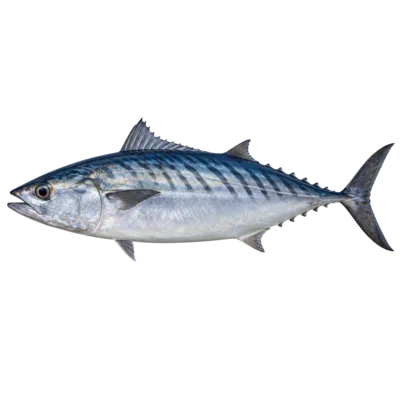
Sarda sarda
Atlantic bonito (Sarda sarda) migrate with the seasons between the Black Sea, the Sea of Marmara and the Aegean[2][1]. In Istanbul fish market records, most bonito arrive in September–October[5]. Large bonito are called torik in Turkish; they have their own page.
Open the Jig Selector with Atlantic bonito →All jigs for Atlantic bonito
JIGTO for Atlantic bonito
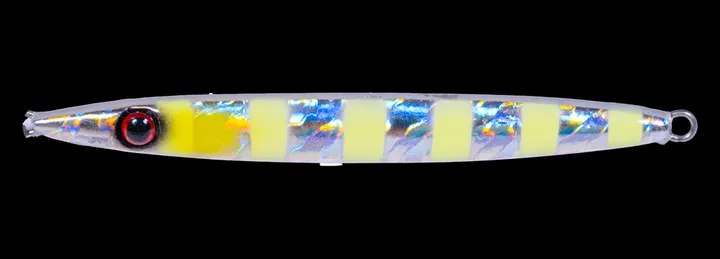 RAZOR 4040 g · 5–40 m
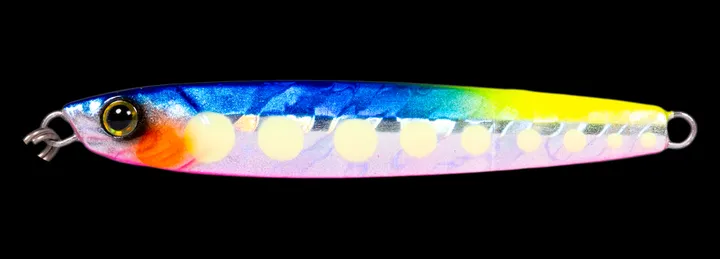 TIDE 4040 g · 5–35 m
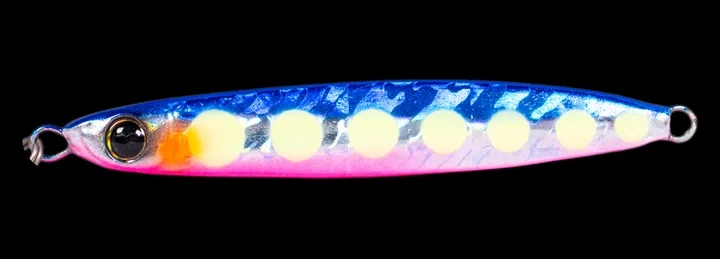 NOVA 4545 g · 5–40 m
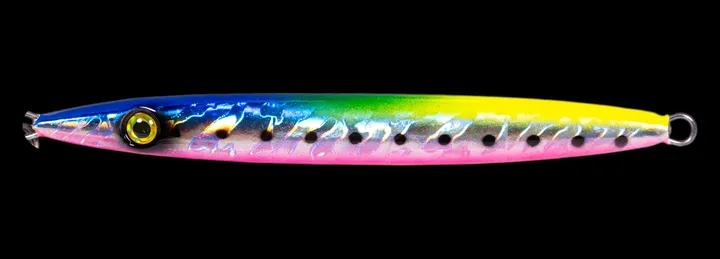 RAZOR 6060 g · 10–60 m
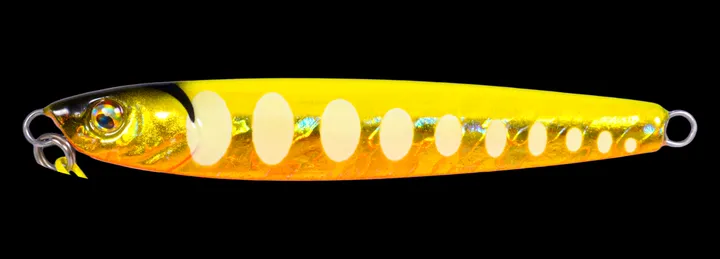 TIDE 6060 g · 10–50 m
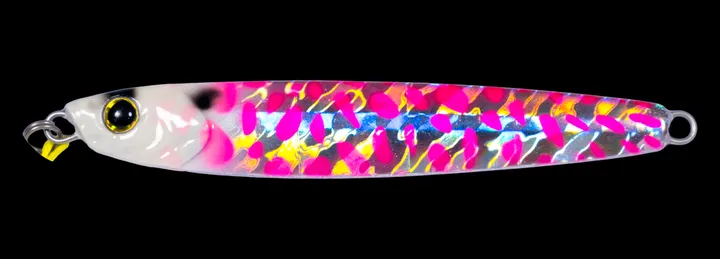 TIDE 8080 g · 15–70 m
This match comes from JIGTO’s product data; it is not a weight measured in the sources.
Season chart
| Region | Jan | Feb | Mar | Apr | May | Jun | Jul | Aug | Sep | Oct | Nov | Dec |
|---|---|---|---|---|---|---|---|---|---|---|---|---|
| Black Sea | active periodA | active periodA | active periodA | no record– | spawning periodS | spawning periodS | spawning periodS | spawning periodS | migration periodM | migration periodM | migration periodM | active periodA |
| Bosphorus | active periodA | active periodA | active periodA | no record– | spawning periodS | spawning periodS | no record– | spawning periodS | migration periodM | migration periodM | active periodA | active periodA |
| Sea of Marmara | active periodA | active periodA | active periodA | no record– | spawning periodS | spawning periodS | spawning periodS | spawning periodS | migration periodM | migration periodM | migration periodM | active periodA |
| Dardanelles | no record– | no record– | active periodA | no record– | no record– | no record– | no record– | no record– | migration periodM | migration periodM | migration periodM | no record– |
| Aegean Sea | active periodA | active periodA | active periodA | active periodA | active periodA | active periodA | no record– | no record– | spawning periodS | active periodA | active periodA | active periodA |
| Mediterranean | no record– | no record– | no record– | no record– | no record– | no record– | no record– | no record– | no record– | no record– | no record– | no record– |
Mmigration periodSspawning periodAactive period–no record
The chart shows whether the sources hold a record for that region and month; it does not show the chance of a catch. An empty cell does not mean the fish is absent, only that there is no sourced record.
Records
Black Sea · March · active period
In a study in the southern Black Sea, the latest recorded bonito catch was on 7 March. [1]
Black Sea · May–July · spawning period
According to a study on the Black Sea and Sea of Marmara coasts, bonito spawn from May to August. [2][3]
Black Sea · August · spawning period
According to one study, the bonito spawning period extends into August; in another, the earliest bonito catch recorded in the Black Sea was on 10 August. [1][2][3]
Black Sea · September–October · migration period
According to a study in the southern Black Sea, the bonito catch reaches its highest level of the year in September–October. [1][2]
Black Sea · November · migration period
According to two studies, the bonito migration in the Black Sea continues in November; in commercial net records the amount is near or below the peak, depending on the type of net. [1][2]
Black Sea · December–February · active period
According to a study in the southern Black Sea, the bonito catch continues until February; in December–February it stays below the September–October peak. [1][2]
Bosphorus · January–March · active period
In Istanbul fish market records, which do not separate the Bosphorus catch, the amount of bonito in January–March is very low compared with autumn. [4][5]
Bosphorus · May–June · spawning period
According to one study, the bonito spawning period starts in May; according to a guide, migratory fish pass from the Bosphorus into the Black Sea until early June. [3][4]
Bosphorus · August · spawning period
According to one study, the bonito spawning period extends into August; a historical record says bonito are seen around Istanbul in this month. [3][5]
Bosphorus · September–October · migration period
According to a guide, bonito are seen in the Bosphorus from mid-September; in Istanbul fish market records, which do not separate the Bosphorus, most bonito arrive in September–October. [3][4][5]
Bosphorus · November · active period
In Istanbul fish market records, which do not separate the Bosphorus catch, the bonito arriving in November is below September–October and above the winter months. [5]
Bosphorus · December · active period
In Istanbul fish market records, which do not separate the Bosphorus catch, the amount of bonito in December is very low compared with autumn. [4][5]
Sea of Marmara · May–July · spawning period
According to a study that also covers the Sea of Marmara, bonito spawn from May to August. [3]
Sea of Marmara · August · spawning period
According to one study, the bonito spawning period extends into August; a historical record says bonito are in the Sea of Marmara from early August. [5][6]
Sea of Marmara · September–October · migration period
The bonito migration in the Sea of Marmara continues in September–October; fishers on Marmara Island and at Marmara Ereğlisi report fishing for bonito in these months. [3][5][6][7]
Sea of Marmara · November · migration period
The bonito migration in the Sea of Marmara continues in November; in two studies fishers report catching bonito in this month too, and a historical record says the fishery ended in mid-month. [3][5][6][7]
Sea of Marmara · December–March · active period
In Istanbul fish market records, which do not separate the Marmara catch, the amount of bonito in December–March is very low compared with autumn. [5][7]
Dardanelles · March · active period
In a study in the Dardanelles, bonito were also caught in spring trial fishing, but most of the catch came in autumn. [8]
Dardanelles · September–November · migration period
In a study in the Dardanelles, most of the bonito caught in trial fishing came in autumn. [8][9]
Aegean Sea · February–April · active period
According to a study at Datça-Bozburun, coastal fishers also fish for bonito in February–April. [10]
Aegean Sea · May–June · active period
According to a study at Datça-Bozburun, the bonito fishery goes on until June; in the Bay of İzmir, bonito are also caught in commercial nets in May–June. [10][11]
Aegean Sea · September · spawning period
In a study in the Bay of İzmir, bonito eggs were found in September; the commercial net fishery for bonito in the bay also starts in September. [11][12][13]
Aegean Sea · October–November · active period
According to a study around Gallipoli and the Dardanelles, most of the bonito catch in the northern Aegean came in autumn. [8][9]
Aegean Sea · December–January · active period
According to a study at Datça-Bozburun, coastal fishing for bonito starts in December; in the Bay of İzmir, the commercial net fishery for bonito lasts until January. [10][11]
Light and colour
- Glow + UV Charges in daylight or torchlight and glows in the dark. Reacts to UV in sunlight.
- UV Lights up under UV and in sunlight underwater. Does not glow in the dark.
- Natural Classic colour and holographic finish, for clear water and bright days.
None of our sources shows that a jig catches more fish because of its colour, glow or UV. Choose the light class by the light in the water and your own preference.
Closed seasons and minimum sizes
In Türkiye, recreational fishing rules are set by the Ministry of Agriculture and Forestry in its Notification No. 6/2 on recreational fishing. Rules change; check the current version before you fish. Outside Türkiye, follow your local rules. Ministry page on fishing (Turkish) ↗
Frequently asked questions
When is bonito season?
In the sourced records, the bonito catch in the southern Black Sea peaks in September–October and goes on until February[1]. In the Sea of Marmara, fishers report fishing for bonito in September–November[7][6]. In a Dardanelles study, most of the catch came in autumn[8]. These records do not show the chance of a catch; they vary from year to year.
What jig weight for Atlantic bonito?
In JIGTO’s product data, Atlantic bonito is a target species of these series: RAZOR 40, TIDE 40, NOVA 45, RAZOR 60, TIDE 60, TIDE 80. Weights run from 40 to 80 g, with a suggested depth of 5–70 m. The deeper the water and the stronger the current, the heavier the series. This match is JIGTO’s product data; it is not a weight measured in the sources.
Are bonito (palamut) and torik the same fish?
Yes, both are Sarda sarda; the name changes with size. Historical records from around Istanbul call a 40–50 cm fish zindanelen, 50–60 cm torik and 60–65 cm sivri; small fish of 15–20 cm are called kestane and çingene palamut[3].
References
- Zengin M, Dinçer AC (2006). Distribution and Seasonal Movement of Atlantic Bonito (Sarda sarda) Populations in the Southern Black Sea Coasts. Study area: Black Sea. https://www.trjfas.org/uploads/pdf_267.pdf
- Genç Y, Dağtekin M, Başçınar NS, Tercan E (2025). Length-weight relationships, growth parameters, mortality and condition factor of Atlantic bonito (Sarda sarda Bloch, 1793) from the Southern Black Sea. Study area: Black Sea. https://doi.org/10.52998/trjmms.1528911
- Zengin M, Ulman A (2026). The Historical Journey of the Bonito (Sarda sarda) Population in the Black Sea From Ancient Times to the Present. Study area: Black Sea / Bosphorus / Marmara. https://doi.org/10.31765/karen.1514360
- İBB. İstanbul olta balıkçılığı rehberi. Study area: Marmara / Bosphorus. (institutional guide) https://tarim.ibb.istanbul/img/1015194102017__5808679461a.pdf
- Yıldız T, Ulman A, Karakulak FS, Uzer U, Demirel N (2023). Bio-economic indicators of fisheries: impact of variations in landings and fish size on market prices in Istanbul Fish Market. Study area: Bosphorus / Marmara. https://doi.org/10.7717/peerj.15141
- Alıçlı TZ (2024). Marmara Ereğlisi'nin (Tekirdağ) balıkçılık potansiyeli ve küçük ölçekli balıkçılık faaliyetinde kullanılan av araçları. Study area: Marmara. https://doi.org/10.3153/AR24010
- Akyol O, Ceyhan T, Ertosluk O (2009). Marmara Adası Kıyı Balıkçılığı ve Balıkçılık Kaynakları. Study area: Marmara. https://dergipark.org.tr/en/download/article-file/57437
- Öztekin A (2020). Trotline hook selectivity for the Atlantic Bonito (Sarda sarda Bloch, 1793) fishery in the Çanakkale Strait (northern Aegean Sea, Turkey). Study area: Dardanelles / Aegean. https://doi.org/10.1515/ohs-2020-0025
- Cengiz Ö (2013). Some biological characteristics of Atlantic bonito (Sarda sarda Bloch, 1793) from Gallipoli Peninsula and Dardanelles (northeastern Mediterranean, Turkey). Study area: Dardanelles / Aegean. https://doi.org/10.3906/zoo-1204-10
- Akyol O, Ceyhan T (2007). Datça-Bozburun Yarımadası (Ege Denizi) Kıyı Balıkçılığı ve Sorunları Üzerine Bir Araştırma. Study area: Aegean / Mediterranean. https://dergipark.org.tr/tr/download/article-file/57543
- Akyol O, Ceyhan T (2007). İzmir Körfezi'nde (Ege Denizi) Kullanılan Sürüklenen Pelajik Uzatma Ağlarının Teknik Özellikleri. Study area: Aegean. https://dergipark.org.tr/tr/download/article-file/57555
- Ak Y, Hoşsucu B (2001). İzmir Körfezi Kemikli Balıklarına Ait Pelajik Yumurta ve Larvaların Tür Çeşitliliği, Dağılımı ve Bolluğu. Study area: Aegean. https://dergipark.org.tr/tr/download/article-file/58102
- Çoker T, Mater S (2006). İzmir Körfezi İhtiyoplanktonu (1974-2005) Türleri. Study area: Aegean. (review) https://dergipark.org.tr/en/download/article-file/57662
This page is based on 24 sourced season records and 13 sources. The season records are the approved data the JIGTO Jig Selector also uses.