
Jigs for annular seabream
Diplodus annularis
The annular seabream (Diplodus annularis) is a small fish studied in shallow coastal waters[1][4]. A study at Gökçeada reports that juveniles start to appear at 0–2 m depth in April and move down to 5–20 m from June[4].
Open the Jig Selector with annular seabream →All jigs for annular seabream
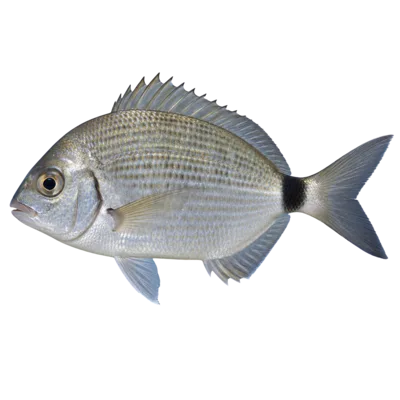
JIGTO for annular seabream
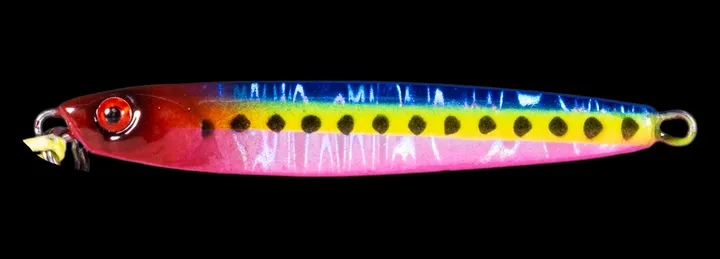 TIDE 10
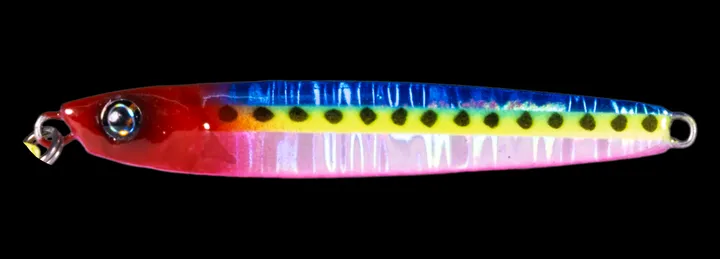 TIDE 12
This match comes from JIGTO’s product data; it is not a weight measured in the sources.
Season chart
| Region | Jan | Feb | Mar | Apr | May | Jun | Jul | Aug | Sep | Oct | Nov | Dec |
|---|---|---|---|---|---|---|---|---|---|---|---|---|
| Black Sea | no record– | no record– | no record– | no record– | no record– | no record– | no record– | no record– | no record– | no record– | no record– | no record– |
| Bosphorus | no record– | no record– | no record– | no record– | no record– | no record– | no record– | no record– | no record– | no record– | no record– | no record– |
| Sea of Marmara | no record– | no record– | no record– | no record– | no record– | no record– | no record– | no record– | no record– | no record– | no record– | no record– |
| Dardanelles | no record– | no record– | spawning periodS | spawning periodS | spawning periodS | spawning periodS | spawning periodS | spawning periodS | spawning periodS | no record– | no record– | no record– |
| Aegean Sea | active periodA | active periodA | spawning periodS | spawning periodS | spawning periodS | spawning periodS | spawning periodS | spawning periodS | active periodA | active periodA | active periodA | active periodA |
| Mediterranean | no record– | no record– | no record– | no record– | no record– | no record– | no record– | no record– | no record– | no record– | no record– | no record– |
Sspawning periodAactive period–no record
The chart shows whether the sources hold a record for that region and month; it does not show the chance of a catch. An empty cell does not mean the fish is absent, only that there is no sourced record.
The chart shows no record for Mediterranean; the unverified field information section below has a record for this region.
Records
Dardanelles · March–September · spawning period
In a study in the shallow waters of Çanakkale, annular seabream hatching dates fell between March and September, most often in June. [1]
Aegean Sea · March · spawning period
According to a study in the Bay of İzmir, annular seabream spawning starts at a low level in March. [2][3]
Aegean Sea · April–May · spawning period
According to a study in the Bay of İzmir and another study cited in a publication, annular seabream spawning is at its highest in April–May. [2][3][4]
Aegean Sea · June–August · spawning period
According to a study in the Bay of İzmir, annular seabream spawning continues at a low level in summer. [2][3][4][5]
Aegean Sea · September–February · active period
In a 1997 research survey off Gülbahçe in the Bay of İzmir, annular seabream were also caught in autumn and winter. [6]
Unverified field information
The records below are not confirmed by a scientific measurement; they come from an angling guide or a general species description. They are kept apart from the chart and the record count above.
Unverified Mediterranean · June–August · active period
According to an angling guide, annular seabream come into shallow water on the Mediterranean coast in summer; this has not been confirmed by a measurement in Türkiye.
- Av Rehberi (avrehberi.com). İspari Balığı Nasıl Yakalanır, 2026-04-01. Study area: Aegean / Mediterranean. (web page, not a measurement) https://avrehberi.com/ispari-baligi-nasil-yakalanir/
Unverified Mediterranean · December–February · active period
According to an angling guide, annular seabream move to deeper, calmer water in the Mediterranean in winter.
- Av Rehberi (avrehberi.com). İspari Balığı Nasıl Yakalanır, 2026-04-01. Study area: Aegean / Mediterranean. (web page, not a measurement) https://avrehberi.com/ispari-baligi-nasil-yakalanir/
Light and colour
- Glow + UV Charges in daylight or torchlight and glows in the dark. Reacts to UV in sunlight.
- UV Lights up under UV and in sunlight underwater. Does not glow in the dark.
- Natural Classic colour and holographic finish, for clear water and bright days.
None of our sources shows that a jig catches more fish because of its colour, glow or UV. Choose the light class by the light in the water and your own preference.
Closed seasons and minimum sizes
In Türkiye, recreational fishing rules are set by the Ministry of Agriculture and Forestry in its Notification No. 6/2 on recreational fishing. Rules change; check the current version before you fish. Outside Türkiye, follow your local rules. Ministry page on fishing (Turkish) ↗
Frequently asked questions
When is annular seabream season?
A study in the Bay of İzmir found that spawning peaks in April–May[3]; at Çanakkale, hatching fell between March and September, most often in June[1]. In a research trawl survey off Gülbahçe, they were also caught in autumn and winter[6].
What jig weight for annular seabream?
In JIGTO’s product data, annular seabream is a target species of these series: TIDE 10, TIDE 12. Weights run from 10 to 12 g, with a suggested depth of 1–20 m. The deeper the water and the stronger the current, the heavier the series. This match is JIGTO’s product data; it is not a weight measured in the sources.
References
- Ayyıldız H, Özen Ö, Altın A (2014). Growth and hatching of annular seabream, Diplodus annularis, from Turkey determined from otolith microstructure. Study area: Marmara / Dardanelles. https://doi.org/10.1017/S002531541400040X
- Daban İB (2021). Türkiye Deniz Balıklarının Üreme Biyolojisi Araştırmaları Üzerine Bir Değerlendirme. Study area: Black Sea / Marmara / Aegean. (review) https://doi.org/10.46384/jmsf.983779
- Ilkyaz AT, Metin G, Soykan O, Kinacigil HT (2018). Spawning Season, First Maturity Length and Age of 21 Fish Species from the Central Aegean Sea, Turkey. Study area: Aegean. https://doi.org/10.4194/1303-2712-v18_1_24
- Ayyıldız H, Altın A (2020). Gökçeada Sığ Sularında Bulunan İsparoz, Diplodus annularis Larva ve Juvenillerinin Günlük Yaş ve Büyüme Özellikleri. Study area: Aegean. https://doi.org/10.29133/yyutbd.652859
- Av Rehberi (avrehberi.com). İspari Balığı Nasıl Yakalanır, 2026-04-01. Study area: Aegean / Mediterranean. (web page, not a measurement) https://avrehberi.com/ispari-baligi-nasil-yakalanir/
- Metin C, Tosunoğlu Z, Tokaç A, Lök A, Aydın C, Kaykaç H (2000). Seasonal Variations of Demersal Fish Composition in Gülbahçe Bay (İzmir Bay). Study area: Aegean. https://journals.tubitak.gov.tr/zoology/vol24/iss4/12/
This page is based on 5 sourced season records and 6 sources. The season records are the approved data the JIGTO Jig Selector also uses. 2 unverified records are listed separately and are not included in this count.