
Jigs for sea bass
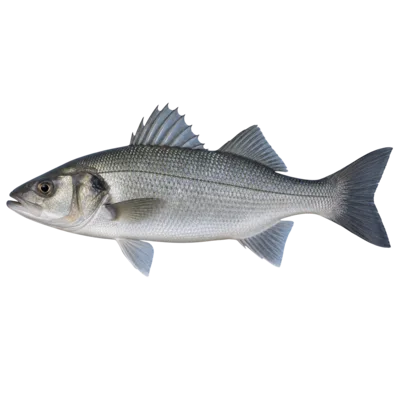
Dicentrarchus labrax
European sea bass (Dicentrarchus labrax) have been recorded on rocky shores, in river mouths and in lagoons[1][7][4][5]. A study with recreational anglers in the Black Sea found them on rocky shores all year round, though they made up a very small share of the catch[1].
JIGTO for sea bass
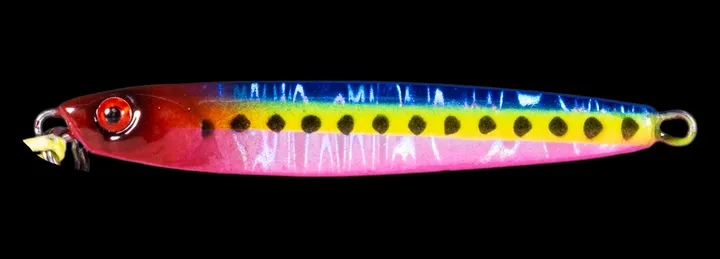 TIDE 1010 g · 1–15 m
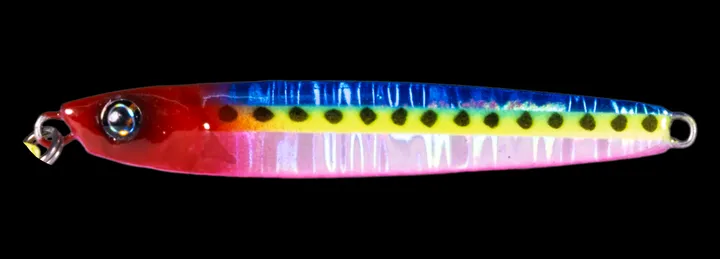 TIDE 1212 g · 1–20 m
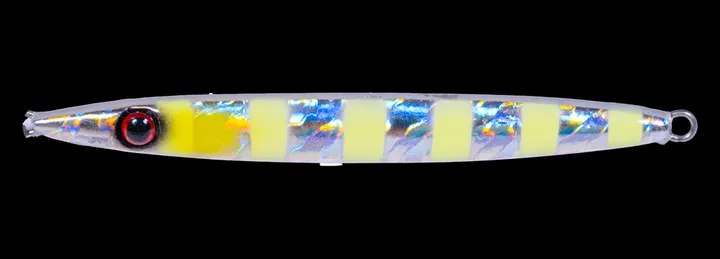 RAZOR 4040 g · 5–40 m
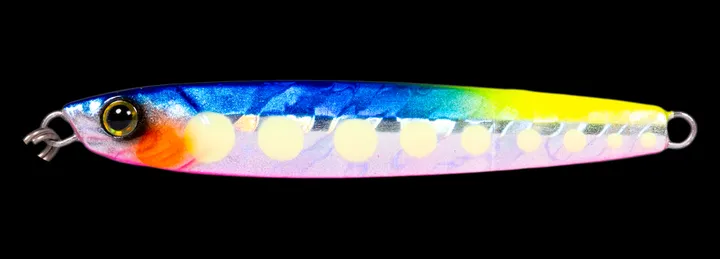 TIDE 4040 g · 5–35 m
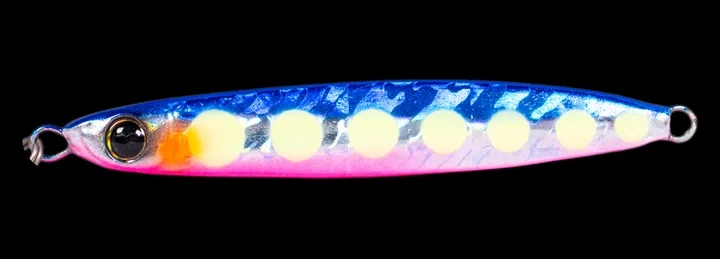 NOVA 4545 g · 5–40 m
This match comes from JIGTO’s product data; it is not a weight measured in the sources.
Season chart
| Region | Jan | Feb | Mar | Apr | May | Jun | Jul | Aug | Sep | Oct | Nov | Dec |
|---|---|---|---|---|---|---|---|---|---|---|---|---|
| Black Sea | active periodA | active periodA | active periodA | active periodA | active periodA | active periodA | active periodA | active periodA | active periodA | active periodA | active periodA | active periodA |
| Bosphorus | no record– | no record– | no record– | no record– | no record– | no record– | no record– | no record– | no record– | no record– | no record– | no record– |
| Sea of Marmara | no record– | no record– | no record– | no record– | no record– | no record– | no record– | no record– | no record– | no record– | no record– | no record– |
| Dardanelles | no record– | no record– | no record– | no record– | no record– | no record– | no record– | no record– | no record– | no record– | no record– | no record– |
| Aegean Sea | spawning periodS | spawning periodS | spawning periodS | no record– | no record– | active periodA | active periodA | active periodA | active periodA | no record– | active periodA | active periodA |
| Mediterranean | spawning periodS | spawning periodS | active periodA | active periodA | active periodA | active periodA | active periodA | active periodA | active periodA | active periodA | active periodA | active periodA |
Sspawning periodAactive period–no record
The chart shows whether the sources hold a record for that region and month; it does not show the chance of a catch. An empty cell does not mean the fish is absent, only that there is no sourced record.
The chart shows no record for Bosphorus, Sea of Marmara; the unverified field information section below has a record for this region.
Records
Black Sea · January–December · active period
According to a study with recreational anglers in the Black Sea, sea bass are present on rocky shores all year round, but their share of the catch is very small. [1]
Aegean Sea · January–March · spawning period
In a monthly plankton study in the Bay of İzmir in 1989–90, sea bass eggs were found from January to March. [2]
Aegean Sea · June–July · active period
In a study at Çeşme, sea bass were caught from June to September at 2–10 m depth. [3][4]
Aegean Sea · August–September · active period
Over two years of sampling in the Homa lagoon in İzmir, only 44 sea bass were caught; most of them in August and September. [3][4]
Aegean Sea · November–December · active period
According to two studies in the Homa lagoon (İzmir) and the Karina lagoon (Aydın), sea bass are present in these lagoons in November and December. [4][5]
Mediterranean · January–February · spawning period
In a plankton study on the Yumurtalık coast (Gulf of İskenderun), sea bass eggs were found in the winter sampling. [6]
Mediterranean · March–September · active period
In 18 months of monthly sampling at the mouth of the Aksu river in Antalya, sea bass were caught in every sampling. [7]
Mediterranean · October–December · active period
In a bait-line fishery followed for one season at Yumurtalık Bay (Adana), sea bass were caught from late October and the catch went on in November–December. [8]
Unverified field information
The records below are not confirmed by a scientific measurement; they come from an angling guide or a general species description. They are kept apart from the chart and the record count above.
Unverified Bosphorus · April–May · active period
According to a general species description, sea bass are caught in every season; the main period it names starts in mid-May.
- İstanbul Büyükşehir Belediyesi, Tarım ve Su Ürünleri Müdürlüğü. LEVREK (tür bilgi föyü, PDF, 15 s.; tarifler de içeriyor). Tarihsiz. Study area: Bosphorus / Marmara. (institutional guide)
Unverified Bosphorus · June · active period
According to a general species description, sea bass are caught from mid-May.
- İstanbul Büyükşehir Belediyesi, Tarım ve Su Ürünleri Müdürlüğü. LEVREK (tür bilgi föyü, PDF, 15 s.; tarifler de içeriyor). Tarihsiz. Study area: Bosphorus / Marmara. (institutional guide)
Unverified Bosphorus · July–November · active period
According to a general species description, sea bass are caught in every season, mostly from mid-May to the end of November.
- İstanbul Büyükşehir Belediyesi, Tarım ve Su Ürünleri Şube Müdürlüğü. Deniz Balıkları (web sayfası; Levrek ve Iskarmoz maddeleri dahil). Tarihsiz. Erişim: 2026-09-13. Study area: Bosphorus / Marmara / Mediterranean. (institutional guide) https://tarim.ibb.istanbul/tarim-ve-su-urunleri-mudurlugu/deniz-ba…
- İstanbul Büyükşehir Belediyesi, Tarım ve Su Ürünleri Müdürlüğü. LEVREK (tür bilgi föyü, PDF, 15 s.; tarifler de içeriyor). Tarihsiz. Study area: Bosphorus / Marmara. (institutional guide)
Unverified Bosphorus · December–March · active period
According to a general species description, sea bass are caught in every season; December–March is outside the main period it names.
- İstanbul Büyükşehir Belediyesi, Tarım ve Su Ürünleri Müdürlüğü. LEVREK (tür bilgi föyü, PDF, 15 s.; tarifler de içeriyor). Tarihsiz. Study area: Bosphorus / Marmara. (institutional guide)
Unverified Sea of Marmara · March · active period
According to the calendar on an angling website, sea bass start coming closer to the shore in March in the Sea of Marmara; this is not based on measurement.
- BalıkTahmini.com. Marmara Levrek Avı Mevsimi: Ay Ay Rehber ve En İyi Noktalar (blog), 13.05.2026. Study area: Marmara. (web page, not a measurement) https://baliktahmini.com/blog/marmara-levrek-avi-mevsimi
Unverified Sea of Marmara · April–May · active period
According to an angling website, sea bass come closer to the shore in spring in the Sea of Marmara; this is not based on measurement.
- BalıkTahmini.com. Marmara Levrek Avı Mevsimi: Ay Ay Rehber ve En İyi Noktalar (blog), 13.05.2026. Study area: Marmara. (web page, not a measurement) https://baliktahmini.com/blog/marmara-levrek-avi-mevsimi
- Kulaksız F. Levrek Ne Zaman Avlanır? (Bölgelere Göre Ayırdık). Balıkçı Sitesi (balikcisitesi.com, ticari blog). Tarihsiz. Study area: Marmara. (web page, not a measurement) https://balikcisitesi.com/levrek-ne-zaman-avlanir/
Unverified Sea of Marmara · July–August · active period
An angling website calls July–August a quiet period for sea bass in the Sea of Marmara.
- BalıkTahmini.com. Marmara Levrek Avı Mevsimi: Ay Ay Rehber ve En İyi Noktalar (blog), 13.05.2026. Study area: Marmara. (web page, not a measurement) https://baliktahmini.com/blog/marmara-levrek-avi-mevsimi
Unverified Sea of Marmara · September–November · active period
According to a general species description, sea bass are mostly caught until the end of November; an angling website also names September–October as the best months in the Sea of Marmara.
- BalıkTahmini.com. Marmara Levrek Avı Mevsimi: Ay Ay Rehber ve En İyi Noktalar (blog), 13.05.2026. Study area: Marmara. (web page, not a measurement) https://baliktahmini.com/blog/marmara-levrek-avi-mevsimi
- İstanbul Büyükşehir Belediyesi, Tarım ve Su Ürünleri Şube Müdürlüğü. Deniz Balıkları (web sayfası; Levrek ve Iskarmoz maddeleri dahil). Tarihsiz. Erişim: 2026-09-13. Study area: Bosphorus / Marmara / Mediterranean. (institutional guide) https://tarim.ibb.istanbul/tarim-ve-su-urunleri-mudurlugu/deniz-ba…
- İstanbul Büyükşehir Belediyesi, Tarım ve Su Ürünleri Müdürlüğü. LEVREK (tür bilgi föyü, PDF, 15 s.; tarifler de içeriyor). Tarihsiz. Study area: Bosphorus / Marmara. (institutional guide)
Unverified Sea of Marmara · December–February · active period
According to an angling website, sea bass move to deeper water in winter in the Sea of Marmara; this is not based on measurement.
- BalıkTahmini.com. Marmara Levrek Avı Mevsimi: Ay Ay Rehber ve En İyi Noktalar (blog), 13.05.2026. Study area: Marmara. (web page, not a measurement) https://baliktahmini.com/blog/marmara-levrek-avi-mevsimi
- İstanbul Büyükşehir Belediyesi, Tarım ve Su Ürünleri Müdürlüğü. LEVREK (tür bilgi föyü, PDF, 15 s.; tarifler de içeriyor). Tarihsiz. Study area: Bosphorus / Marmara. (institutional guide)
Light and colour
- Glow + UV Charges in daylight or torchlight and glows in the dark. Reacts to UV in sunlight.
- UV Lights up under UV and in sunlight underwater. Does not glow in the dark.
- Natural Classic colour and holographic finish, for clear water and bright days.
None of our sources shows that a jig catches more fish because of its colour, glow or UV. Choose the light class by the light in the water and your own preference.
Closed seasons and minimum sizes
In Türkiye, recreational fishing rules are set by the Ministry of Agriculture and Forestry in its Notification No. 6/2 on recreational fishing. Rules change; check the current version before you fish. Outside Türkiye, follow your local rules. Ministry page on fishing (Turkish) ↗
Frequently asked questions
Where are sea bass found?
The sources record sea bass on the rocky shores of the Black Sea[1], in the Aksu river mouth in Antalya[7], in the Homa lagoon in İzmir[4] and in the Karina lagoon in Aydın[5]. A study at Çeşme caught them at 2–10 m depth[3].
What jig weight for sea bass?
In JIGTO’s product data, sea bass is a target species of these series: TIDE 10, TIDE 12, RAZOR 40, TIDE 40, NOVA 45. Weights run from 10 to 45 g, with a suggested depth of 1–40 m. The deeper the water and the stronger the current, the heavier the series. This match is JIGTO’s product data; it is not a weight measured in the sources.
When is sea bass season?
The sourced records differ by region: at Çeşme they were caught from June to September[3], in the İzmir and Aydın lagoons they were present in November–December[4][5], and at Yumurtalık (Adana) the bait-line fishery ran in November–December[8]. Our information for the Sea of Marmara and the Bosphorus is not based on measurement; it is shown separately below.
References
- Erbay M, Carlson A, Grati F (2024). Evaluating the unexplored recreational fishing in the Turkish Black Sea: socio-economic significance and environmental impact. Study area: Black Sea. https://doi.org/10.3389/fmars.2024.1386911
- Ak Y, Hoşsucu B (2001). İzmir Körfezi Kemikli Balıklarına Ait Pelajik Yumurta ve Larvaların Tür Çeşitliliği, Dağılımı ve Bolluğu. Study area: Aegean. https://dergipark.org.tr/tr/download/article-file/58102
- Soykan O, Kınacıgil HT (2013). Setlining for European Seabass (Dicentrarchus labrax, Linnaeus, 1758); Technical features and bait preference. Study area: Aegean. https://doi.org/10.12714/egejfas.2013.30.2.01
- Topkara E, Akalın S, Akyol O, Şen H (2024). Homa Dalyanı (İzmir, Ege Denizi)'nda üç ticari balık türünün bazı populasyon özelliklerinin belirlenmesi üzerine bir ön çalışma. Study area: Aegean. https://doi.org/10.58626/menba.1532531
- Kaykaç MH, Tosunoğlu Z (2015). Karina ve Akköy kıyı lagünlerindeki küçük ölçekli balıkçılık. Study area: Aegean. https://doi.org/10.12714/egejfas.2015.32.4.01
- Mavruk S (2009). Yumurtalık Kıyısal Zonu (İskenderun Körfezi) İhtiyoplanktonunda Mevsimsel Değişimler. Study area: Aegean / Mediterranean. (thesis)
- İnnal D. (2016). Fish Diversity and Distribution in the Aksu River Estuary (Antalya-Turkey), in Relation to Environmental Variables. Study area: Mediterranean. https://www.biotaxa.org/em/article/download/20198/19603
- Özyurt C.E. (2024). Yumurtalık Koyu (Adana/Türkiye) Kıyısal Bölgesinde Levrek (Dicentrarchus labrax) Avında Kullanılan Bırakma Olta Takımının Hedef Dışı Av ve Kayıp Av Aracı Bakımından İncelenmesi. Study area: Mediterranean. https://doi.org/10.46384/jmsf.1523538
This page is based on 8 sourced season records and 8 sources. The season records are the approved data the JIGTO Jig Selector also uses. 9 unverified records are listed separately and are not included in this count.